

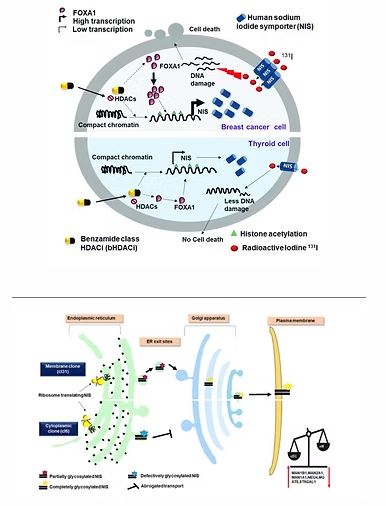
The aim of this project is to understand the basic biology of human sodium iodide symporter (hNIS) gene function in breast cancer (BC). The natural overexpression of hNIS protein in majority of BC samples has triggered global research initiatives to verify the possible targeted radioiodine therapy as an option in BC patients. We have published several novel findings in this area, with potential clinical application for treatment of metastatic breast cancer. A major challenge for translation of hNIS-based radio-iodine therapy in BC is due to its presence as a cytoplasmic protein inside the BC cells, thus limiting the scope of iodine accumulation for therapeutic use. Challenging this disparity in hNIS expression, we demonstrated specific improvements possible by tapping in the transcriptional and post-translational regulation of hNIS. We have shown benefits of using HDACi drug molecules for promoting NIS expression in BC cell types and later shown pretreatment of benzamide class of HDACi such as MS275 can benefit clinical trial initiatives [Scientific Reports (2016) 6:19341; Molecular Therapy: Oncolytics, 2020]. We have also identified the role of several glycosylation enzymes including mannosidase enzymes causing defective NIS protein transport due to which a major amount of NIS protein stay in the cytosol and lack iodine transport function in BC cells [Journal of Cell Science (2019) 132]. Receptor switching in HER2+ve breast cancer The HER2 receptor is a tyrosine kinase that drives breast cancer commonly designated as HER2+ve subtype. In these patients, the HER2 receptor protein is either overexpressed and/or harbor mutations occurring in various segments of this receptor. We are specifically studying how the mutations occurring in the dimerization domain might alter the dynamics of signaling, thereby promoting resistance to the HER2 targeted therapies. Understanding the downstream signaling switches that occur in presence of specific acquired mutations would help develop effective precision treatment. As HER2 oncogenic overexpression is also well known in some other cancer types like gastric cancer, relevance of these findings are expected to impact clinical practices in those areas as well.