

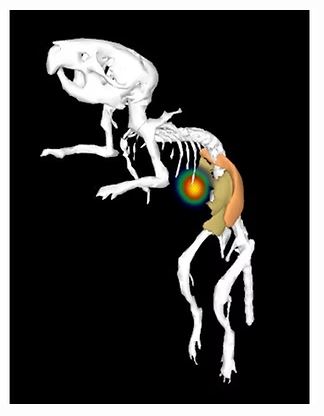
In the area of cancer nanomedicine, we have drawn long-standing collaborative projects with various qroups in the neighboring institutes In a DBT funded collaborative project with Bombay college of Pharmacy, we developed sugar conjugated nano-formulation for intraocular carboplatin formulation in orthotopic retinoblastoma mouse model. In another collaboration with Chemical Engineering dept. |T-B, we have developed mesoporous silica nanoparticles (MSN) loaded Gemcitabine and/or curcumin for treatment of pancreatic cancer. Currently a modified biocompatible film based drug delivery system was developed and tested for in vivo Gemcitabine delivery in mouse orthotopic pancreatic cancer model. To circumvent the limitations of systemic drug administration, implantable drug formulations are gaining popularity for local drug delivery. We are developing a delivery system that can sustain controlled release of the drug molecule for use in pancreatic cancer clinic. In collaboration with colleagues at Chemistry division, BARC, we have developed and tested zinc gallate (ZGÓ)-based persistent luminescence nanoparticles (NPs) coated with a synthetic peptide (pHLIP) as a targeting moiety. Initially, Cr3+-doped ZGO-NPs were prepared and functionalized to obtain ZGO-pHLIP NPs. Results showed thet tumor specific homing of the ZGO-oHLP was achieved within a short time of 6h. The ZGO-pHUP formulation has the potential for detection and diagnosis of cancer using methodology [ACS Appl. Bio Mater. 2021). Mora recently non-invasive the zinc galate (ZnG3204)-ba=ed nanoformulation was suitably modifie- for developing an innovative theranostic approach for boron neutron capture -herapy (BNCT) modality of cancer treatment [ACS Appl. Bic Mater, 2022]